
Skin Checks and Actinic Keratosis Care in Sinsa
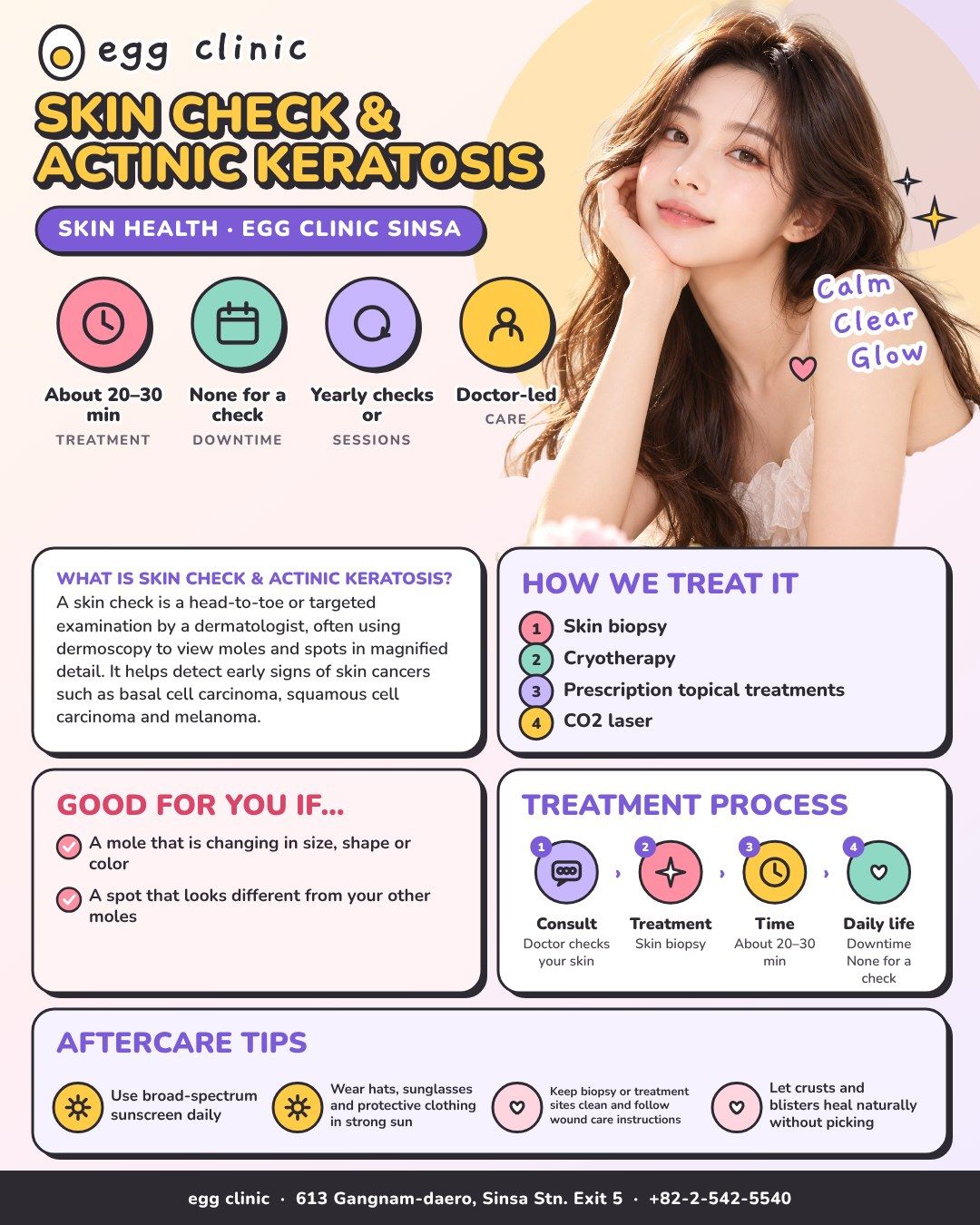
A skin check is a careful examination of moles, spots and sun-damaged areas to catch concerning changes early. Actinic keratoses are rough, sun-related patches that can sometimes progress to skin cancer. At Egg Clinic, a dermatologist examines your skin and recommends biopsy, treatment or monitoring as needed.
Treatment time: About 20–30 min
Downtime: None for a check; about 1 week after treatment
Sessions: Yearly checks or as advised
Skin Health
Skin Check & Actinic Keratosis
What is Skin Check & Actinic Keratosis?
A skin check is a head-to-toe or targeted examination by a dermatologist, often using dermoscopy to view moles and spots in magnified detail. It helps detect early signs of skin cancers such as basal cell carcinoma, squamous cell carcinoma and melanoma.

Actinic keratosis(AK) is a rough, scaly patch caused by long-term sun exposure, most often on the face, scalp, ears, lips, forearms and backs of the hands. AKs are considered precancerous because a small proportion can develop into squamous cell carcinoma, so they are usually treated or closely monitored.
Who it's for
A skin check is a good idea if you have:
- A mole that is changing in size, shape or color
- A spot that looks different from your other moles
- Rough, scaly or sandpaper-like patches on sun-exposed skin
- A sore that bleeds, crusts or does not heal within a few weeks
- Fair skin, a history of sunburns, many moles, or a family history of skin cancer
- A rapidly growing, bleeding or very dark changing lesion, which should be seen promptly
How we treat it at Egg Clinic
Every visit starts with a dermatologist's examination, including dermoscopy of any spots of concern. If a lesion looks suspicious, a skin biopsy may be taken and sent for pathology to confirm the diagnosis. Confirmed skin cancers are managed according to type and stage, and we refer to specialized centers when advanced surgery or further treatment is required.
For actinic keratosis, options include cryotherapy with liquid nitrogen for individual lesions, prescription topical treatments for wider sun-damaged areas, and CO2 laser resurfacing in selected cases. Thick or unusual AKs may be biopsied first to rule out squamous cell carcinoma. Daily sun protection is an essential part of treatment and prevention.
What to expect
A skin check usually takes about 20 to 30 minutes and is usually comfortable. Please point out any spots that concern you. If a biopsy is needed, the area is numbed with local anesthetic, and results usually return within about one to two weeks. Cryotherapy stings briefly and may cause redness, a blister or a crust that heals in about a week or two. Topical treatments can cause redness, peeling and irritation during use, which is expected. Temporary light or dark marks may remain. New AKs can develop over time, so regular follow-up checks, often yearly, are recommended.
Aftercare
- Use broad-spectrum sunscreen daily and reapply outdoors
- Wear hats, sunglasses and protective clothing in strong sun
- Keep biopsy or treatment sites clean and follow wound care instructions
- Let crusts and blisters heal naturally without picking
- Check your skin monthly and note any new or changing spots
- Keep your recommended follow-up appointments
Frequently asked questions
How often should I have a skin check?
Many people benefit from a yearly check. Your dermatologist may suggest more frequent visits if you have many moles, previous skin cancer or significant sun damage.
Is actinic keratosis cancer?
No, it is a precancerous lesion. Most do not progress, but some can develop into squamous cell carcinoma, so treatment or monitoring is advised.
What warning signs should I watch for in a mole?
Look for asymmetry, irregular borders, uneven color, a size larger than a pencil eraser, and any change over time. See a dermatologist promptly if you notice these.
Meet your doctor
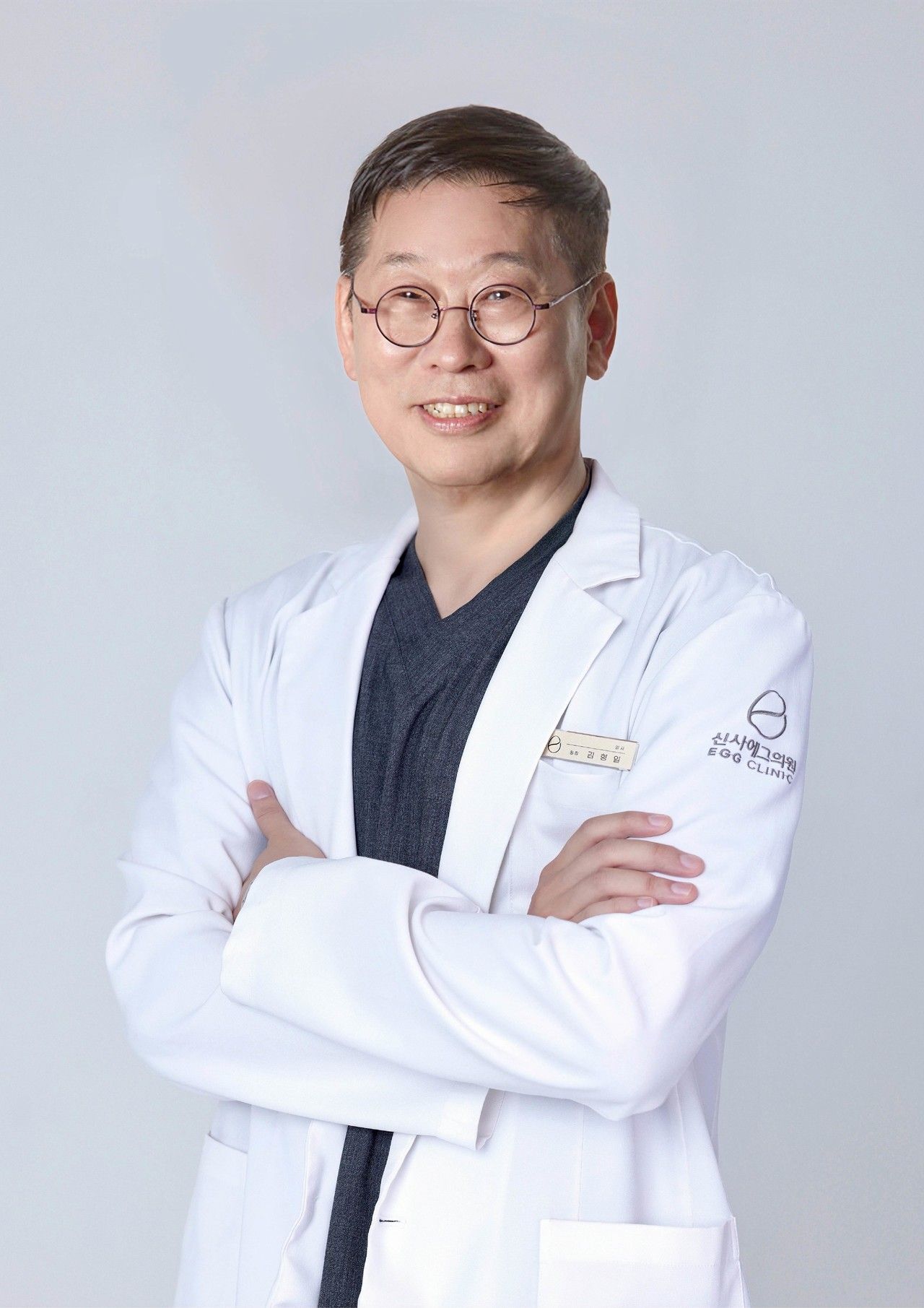
Dr. Hyungil Kim
Director, Egg Clinic Sinsa
- Graduated from Yonsei University College of Medicine
- Former dermatology resident at Severance Hospital
- PhD in Medicine, Yonsei University Graduate School
- Former professor and chair of microbiology, Ajou University School of Medicine
- Former visiting professor at Tufts University, USA
- Regular member of the Korean Dermatological Association
Clinic days: Monday and Wednesday.
Visit Egg Clinic in Sinsa
Egg Clinic is located at 613 Gangnam-daero, Seocho-gu, Seoul (3rd, 5th, 6th and 7th floors), directly in front of Sinsa Station Exit 5 on Line 3. We are open weekdays 11:00–20:30 and Saturday and Sunday 11:00–17:00, with a lunch break from 14:00 to 15:00. To book a consultation, call +82-2-542-5540, email eggclinic1@gmail.com, or message us on WhatsApp or KakaoTalk.
Related treatments at Egg Clinic
